Intellectual – Frameworks & Theory · Editorial
By Moakanyi Magazine · China-in-Africa · June 2026
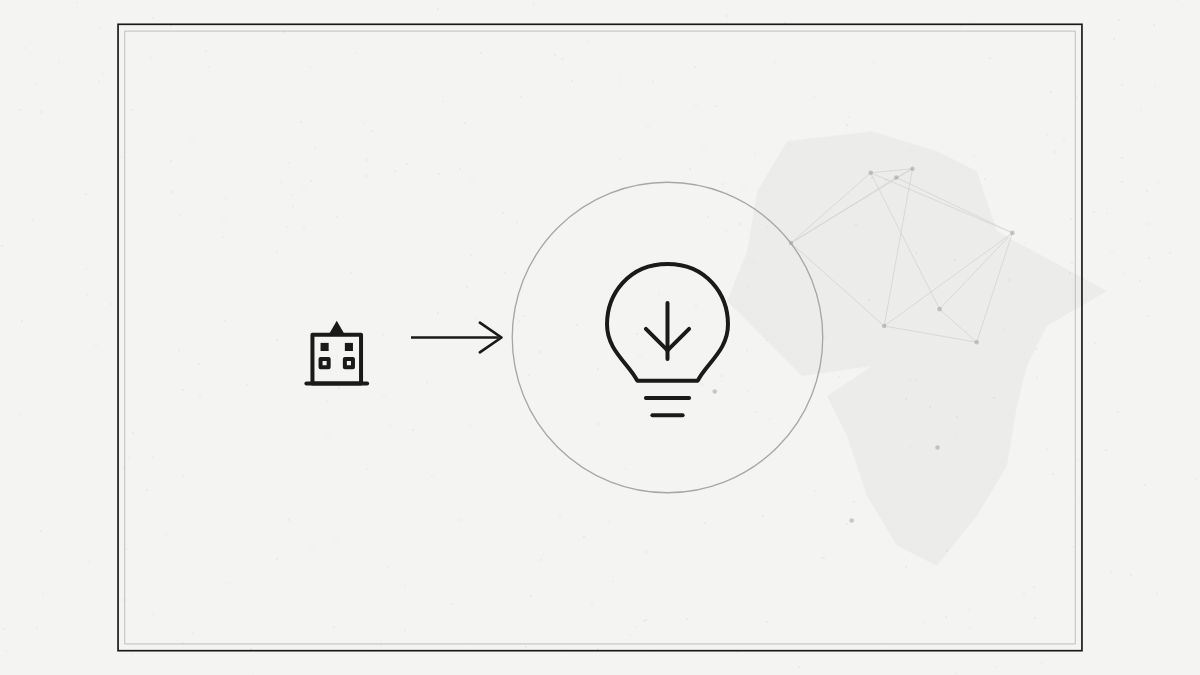
The easy story about Chinese parks in Africa is about money crossing a border. The more interesting one is about a method crossing a border. TEDA Suez is not a one-off project so much as a deliberate transplant: the Tianjin Economic-Technological Development Area, lifted from China's Bohai coast and rebuilt on Egypt's Red Sea. The case is worth studying not for what it cost but for what it claims to be – a portable system for manufacturing industrialisation, exportable to states that lack one of their own.
The copy: same playbook, different coastline
China's State Council assigned Tianjin TEDA to undertake the Suez project in 1998, and the developers were explicit that they were reproducing a model. The two sites were chosen partly because they rhyme: desert terrain roughly 120 to 150 kilometres from the capital, a major port, a coast. First-phase construction began in 2008 on 1.34 square kilometres; a second phase of about 6 square kilometres followed in 2016. Chinese state sources brand the result the "TEDA Overseas Model", a framework they say has since been applied to more than a dozen Belt and Road projects.
The geographic mirroring is not sentiment – it is risk reduction. A developer that has already solved a desert-coast park near a capital can reuse its engineering, its layout and its management drills rather than improvise. The model's value, in other words, is that it converts a bespoke megaproject into something closer to a product – and a product can be sold to the next host in line.
The unit of export here is not capital but a repeatable park-building method.
The mechanism: zones as a packaged technology
Researchers studying China's overseas special economic zones note a consistent bundle: top-level political backing, a single accountable developer, location advantages, tax breaks, duty-free inputs and export exemptions, assembled as a package rather than improvised project by project. By one academic count China had established 82 such industrial parks across 24 countries by January 2020. Suez is treated as a relative success within that programme – with reported capital intensity around US$700 per square metre – because of the investment it pulled in, not because the model runs without friction.
Packaging is what lets the model scale, and also what hides its conditions. The incentives a host grants – tax holidays, duty-free imports, export exemptions – are real fiscal costs borne locally, justified only if the jobs, skills and supplier links materialise. The package arrives looking turnkey; the bill for the concessions is paid whether or not the factories fill, and that asymmetry is where a host can lose.
A zone is best understood as a technology – and like any technology, its transfer can fail.
The catch: replicability is a claim, not a result
The arm's-length point is that "it worked in Suez" does not certify the template for Lagos, Lusaka or Dar es Salaam. Suez had advantages many sites lack – proximity to a global shipping artery, an Egyptian state able to grant economic-zone status, anchor tenants with their own reasons to be near Europe and the Gulf. Where those conditions are thin, the same packaged model can produce serviced land without the factories, and leave the host paying for the concessions anyway. The honest lesson is conditional: the method travels only as far as the local fundamentals carry it.
For African planners, that is the useful takeaway from TEDA – not a model to copy on faith, but a diagnostic. The questions Suez answers in the affirmative – is there an anchor market, a committed state, a logistics advantage – are exactly the ones a prospective host must answer before signing. Treated as a checklist rather than a guarantee, the template is worth studying. Treated as a promise, it has already disappointed at sites that copied the form without the fundamentals.
The template is real; its guarantee is not – the fundamentals still decide.
Sources: UNIDO (cited), Xinhua – TEDA Overseas Model