Two Lanes for Grain: ZMX–GMB Split Separates Commercial Trade From Strategic Reserves in Zimbabwe
A single grain agency cannot be both a strategic shock-absorber and a nimble commercial trader at the same time; the two jobs pull in opposite directions. One demands holding stock against drought and disruption regardless of price. The other demands moving grain...
Peace, Pixels and Plants: SADC Ties Industrialisation to Digital Growth for 2026–27
Industrial policy in southern Africa has long had a sequencing problem. The factories everyone wants assume a stability and a connectivity that much of the region cannot yet take for granted. The SADC Council of Ministers, in framing the bloc's 2026–27 agenda, has...
Zimbabwe’s $115 million rail financing push is really a mining-logistics strategy
NRZ wants locomotives, wagons and network repairs, but the deeper commercial objective is restoring a rail system capable of carrying mining growth to regional ports. Zimbabwe’s National Railways is negotiating a $115 million facility with Afreximbank to purchase...
Ethiopia’s tree-planting drive is becoming productive infrastructure
The Green Legacy Initiative is increasingly being framed not only as reforestation, but as soil, water and agricultural infrastructure with measurable economic consequences. Ethiopia’s Green Legacy Initiative is increasingly being presented as more than a national...
Egypt’s rise in new foreign companies is turning reform into an investment metric
A 33.7% increase in foreign company incorporations gives Egypt a measurable indicator of investor entry, but company formation still has to translate into productive capital and jobs. Egypt registered 5,022 new foreign companies during the first half of 2026, up 33.7%...
Cement and input costs
Cement and steel do not have local prices so much as global ones in local clothing. A note on why Botswana construction is exposed to energy and commodity shocks it cannot see coming.
Grow, process, sell: the business chain Africa keeps leaving incomplete
China’s pledges span planting, processing and trade. The middle link, turning crops into finished goods on African soil, is the one the continent most needs and most often misses.
Industrial land for minerals
Botswana’s push to explore beyond diamonds is a minerals story with a property tail: every new deposit eventually needs roads, depots and service yards before it needs a mine.
Trade fairs as pipelines: turning expo handshakes into SME orders
A four-day expo can announce billions in deals. The harder question is how many of those handshakes survive contact with shipping schedules, payment terms and a small firm’s first export.

Oil-storage infrastructure
The Botswana-Oman deals are remembered for solar and minerals. Tucked inside them is an infrastructure line – oil storage in Botswana and at Walvis Bay – that quietly reshapes the logistics map.

Solar megaproject sites
Botswana’s 500 MW solar deal is usually read as an energy story. For property and development, it is a land, grid and construction story – and the land is the part nobody is talking about yet.
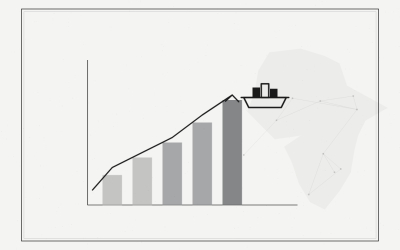
Trade finance: the quiet plumbing behind Africa’s exports to China
Tariffs and protocols open the market, but a shipment only sails when someone finances it. The credit, insurance and bonds behind African exports rarely make headlines, yet they decide who can trade.
The Thinker’s Economy
The WTO’s leading indicator pointing to continued trade resilience is a fact. Turning that fact into a decision is the work of the thinker’s economy and the nine-section architecture built to do it.
Quarantine and paperwork: the unglamorous keys to Africa’s China market
Market access into China is won less by handshakes than by inspection protocols. Twenty-two export agreements have opened doors, but only for the producers who can meet the standards behind them.
The Entrepreneur’s War Room
The World Bank’s 2026 downgrade is less a forecast than a warning to founders: in a year of shocks, scenario planning stops being a luxury and becomes a discipline.
Made in Africa, sold to China: why zero tariffs are only the doorway
China has thrown the door open to African goods. Walking through it with finished products, rather than raw ore, is the harder task that no tariff schedule can do for the continent.
The National Brand Premium
When the World Bank cut its 2026 global growth outlook, it underlined a quieter truth for Botswana: the price a country pays to attract capital is set by its national brand.
The AI Supply Chain Lens
AI hardware trade is reshaping who imports, resells and trains. For Botswana, the supply-chain lens reveals where local value can actually be captured.
The 10,000: Africa’s private Chinese firms outnumber the state giants
The image of Chinese investment in Africa is a state colossus building dams. The data says otherwise: most of the roughly 10,000 Chinese firms on the continent are small and privately owned.
Tax Mix Rebalanced: VAT Rises to 15.5% as IMTT on ZiG Falls to 1.5% in Zimbabwe’s 2026 Budget
Zimbabwe’s 2026 budget raises VAT to 15.5% and cuts the IMTT on ZiG to 1.5% while USD stays at 2%, nudging transactions toward the local currency.
From Strategic Thought To Decisive Action.
Moakanyi reports the market. The wider Cabanga ecosystem
helps you lead it — media, infrastructure and growth, one system.
Intelligence
Business media across Africa’s real economy.
Infrastructure
Websites engineered as your headquarters.
Growth
Marketing that turns visibility into revenue.
04
ACADEMY
The Digital Navigator Certification.