Economics – Trade & AfCFTA · Editorial
By Moakanyi Magazine · China-in-Africa · June 2026
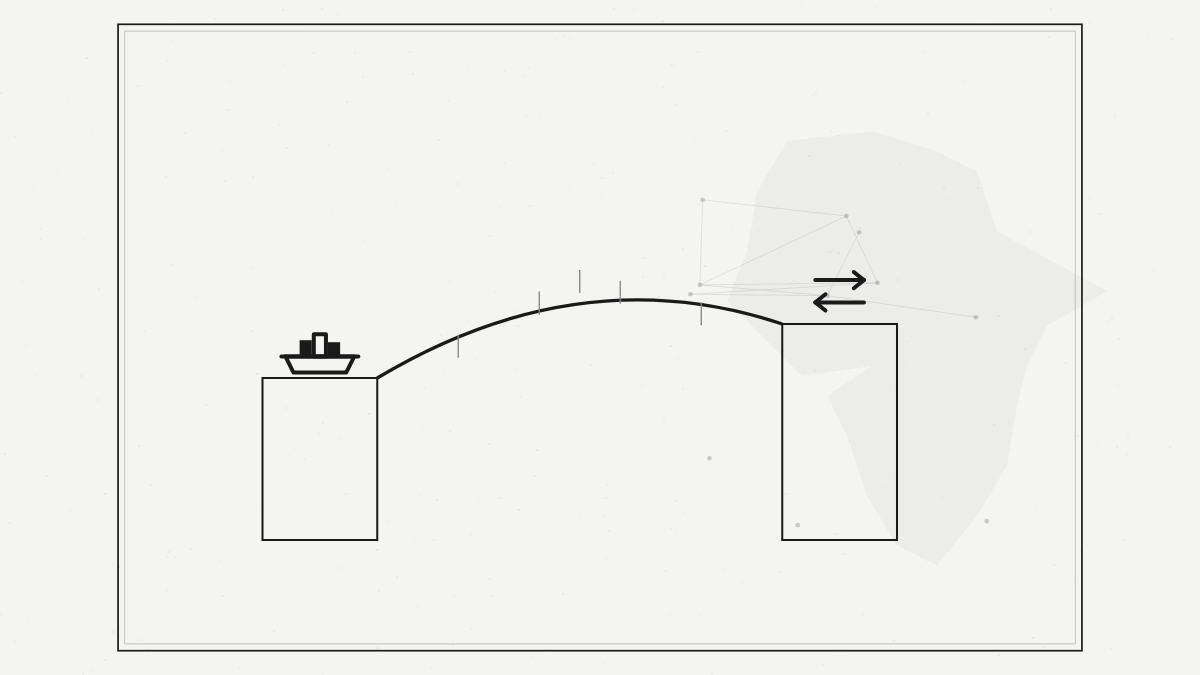
By the headline measure, Mombasa is a success story: cargo dwell time fell from 22 days toward single figures and throughput rose from 13.6 million tonnes in 2016 to around 35 million tonnes by 2023. Yet a container cleared swiftly at the quay can still take seven to ten days to reach Kampala, stopped at checkpoint after checkpoint. The port got faster while the corridor stayed slow – which means the efficiency problem was never really at the port. It was always inland, on roads and borders no crane can fix.
The port gains: real, measured, substantial
The improvements at Mombasa are documented by the Northern Corridor observatory, not merely claimed by operators. Truck turnaround at the port fell from 4.3 hours to 2.3, and the SGR's cargo service cut Mombasa-Kampala rail transit from 18 days to three while reducing Nairobi-Mombasa transport costs by as much as 56%. Early in 2018, the Nairobi inland container depot went from receiving 108 SGR containers a day to 324 within months.
The hardware – deeper berths, a rail link, an inland dry port – did its job, and the throughput numbers prove it. This is the part of corridor reform that money can buy directly: a government with access to financing can dredge a harbour, lay a siding and order new cranes, and the dwell-time charts will move. Mombasa is the proof of concept that the capital-intensive fixes work. It is also the easier political sell, because a new berth has a ribbon to cut and a photograph to take, whereas the reforms that follow it have neither.
The quay is the easy part of a corridor; the easy part is now largely solved.
The inland drag: where the days reappear
The losses return beyond the port gate. Cross-border trucks on the corridor still average seven to ten stops per journey – weighbridges, customs posts, police checks – each adding cost and delay across Kenya, Uganda, Rwanda, Burundi and eastern DRC. The World Bank's long-running trade-facilitation work has consistently found that these soft barriers, not berths, dominate the final delivered cost of goods to landlocked markets.
This is the gap between a national asset and a regional outcome. Kenya can modernise Mombasa on its own balance sheet; clearing the corridor requires five governments – Kenya, Uganda, Rwanda, Burundi and the DRC – to agree on harmonised checks, mutual recognition of inspections, and shared data, a far harder build than any berth, and one with no single lender to write the cheque. The hardware was the part one country could finance alone; the reforms are the part no country can deliver alone, which is precisely why they lag the cranes.
The arithmetic is unforgiving. A corridor that has shaved its port dwell time to a few days can still deliver goods to Kampala in seven to ten, because each inland stop reintroduces the delay the quay just removed. Transit from Mombasa to the Great Lakes remains measured in those border-bound days rather than in the hours the rail link promised. The hardware sets the best possible time; the institutions decide the actual one, and they have moved far more slowly than the cranes.
You can dredge a harbour with money; you can only clear a border with politics.
Why the chain, not the link, is the test
The SGR and the port upgrades fixed the most visible link in the chain. But corridor efficiency is set by the slowest segment, and that segment is now the inland road and the borders strung along it. Chinese-financed hardware lifted the ceiling on what the corridor could achieve; whether the region reaches that ceiling depends on reforms no railway or crane can deliver, and that no foreign loan can buy.
It is worth being precise about credit and blame. The Chinese-financed hardware genuinely raised the ceiling, and dismissing the port and rail gains as cosmetic would be as misleading as the celebratory framing they are often given. The point is narrower: infrastructure removed the bottleneck it was designed to remove, and revealed the next one, which lies beyond any contractor's scope. A corridor is a chain of decisions as much as a chain of assets, and the decisions are now where the time is lost.
For AfCFTA-era trade, the lesson is plain. The next gains will come not from another loan or another gantry, but from the unglamorous, sovereignty-touching work of letting cleared cargo simply keep moving across a line on a map. That is the harder half of the corridor, and the half the headline projects leave untouched.
Sources: Northern Corridor Transport Observatory, Northern Corridor Authority, World Bank