Economics – Global & Regional · Editorial
By Moakanyi Magazine · China-in-Africa · June 2026
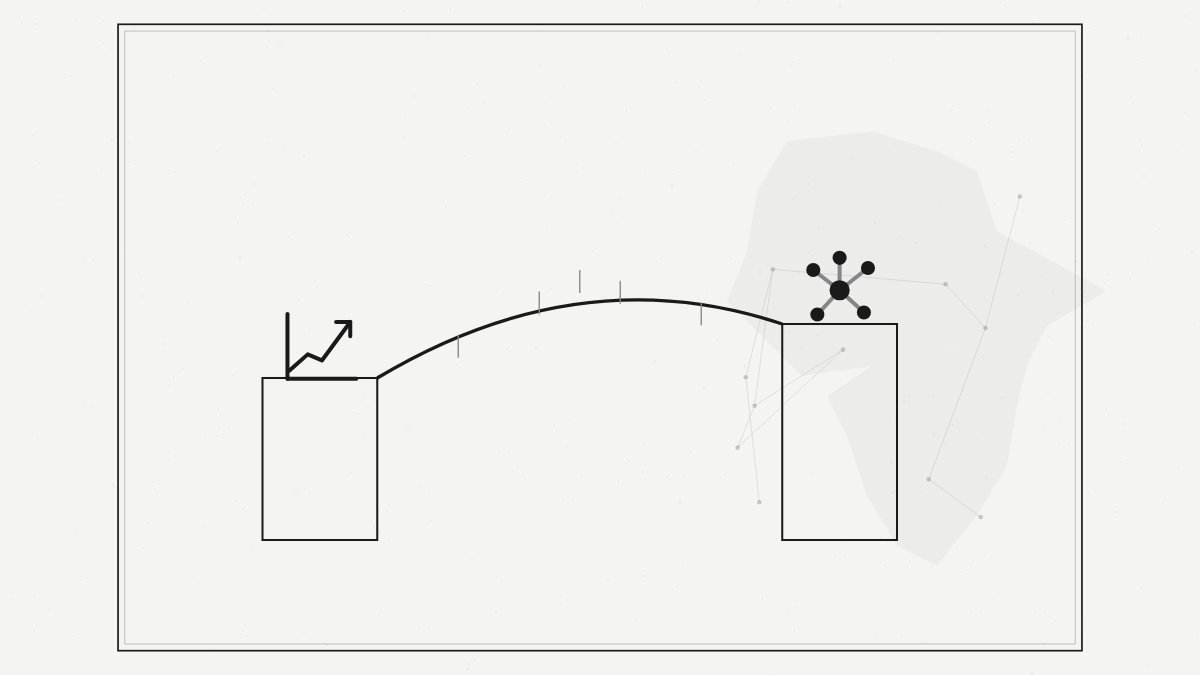
Every few years a China-Africa summit produces a large number and a larger promise. The number gets quoted, debated and forgotten. What is less visible is the standing apparatus that decides whether the promise becomes a railway or a press release. The Forum on China-Africa Cooperation, inaugurated at its first ministerial conference in Beijing in October 2000, is that apparatus – and at 25 it has become less a periodic event than a permanent delivery system.
Reading FOCAC as architecture rather than theatre changes what it is fair to expect of it. The headline figure is the easy part; the harder question is what institutional plumbing carries it from a Beijing podium to a construction site in Lusaka or Djibouti. Twenty-five years in, the forum's record is best judged not by any single pledge but by the durability of the structure that processes them all – and by how much of that structure African states have learned to operate rather than merely attend.
A standing forum, not a one-off summit
According to China's foreign ministry, FOCAC now comprises 55 members – China, 53 African states with diplomatic ties to Beijing, and the African Union Commission – and convenes a ministerial conference every three years, rotating between China and an African host under co-chairs. Three of those gatherings have been elevated to full summits: Beijing in 2006, Johannesburg in 2015 and Beijing again in 2018, with a fourth in 2024. The triennial rhythm is itself a design choice, frequent enough to sustain momentum yet spaced enough to allow delivery between meetings.
Beneath the cycle sits the connective tissue: bi-national commissions with 21 African countries and trade and economic joint committees with 51. This is what lets pledges survive the gap between summits, when the cameras have gone. A single summit can announce; only a standing institution can follow through, and FOCAC's quiet achievement is that it built the follow-through into the calendar rather than leaving it to goodwill. The forum describes itself as a platform for collective dialogue and a mechanism for pragmatic cooperation – an institution, in other words, rather than an event.
FOCAC's value is not the summit but the calendar and the committees that outlast it.
Pledges that arrive as plans, not slogans
The forum's method is to convert money into countable lines. The 2015 Johannesburg summit produced ten major cooperation plans; the 2018 Beijing summit, eight major initiatives. Both broke broad ambitions into named deliverables across infrastructure, agriculture, health, education, the digital economy, manufacturing, mining and security – a structure China's foreign ministry presents as a mechanism for pragmatic cooperation rather than aid. The continental significance is that African states deal with Beijing through a shared platform rather than 53 separate negotiations, which in principle pools their bargaining weight.
The framing is China's own, and worth holding at arm's length: a forum that lists its own outputs also grades its own homework. Between 2013 and 2018, foreign ministry figures put China's foreign aid at RMB 270 billion (about US$38 billion), of which 45 per cent went to African countries – sizeable, but a reminder that aid is only one channel. Much of FOCAC's headline support arrives as commercial credit and corporate investment, not grants, which means the forum's pledges carry repayment obligations the word cooperation can obscure. The discipline of itemising a pledge is real; so is the absence of an independent body to confirm the items were delivered.
The forum's discipline is in itemising pledges; its blind spot is grading itself.
Two decades, three flagship eras
The forum's history divides into recognisable phases, and reading them in sequence shows an institution learning in public. The early ministerial years built the diplomatic scaffolding; the 2006 and 2015 summits turned that scaffolding into pledge architecture, with the ten cooperation plans of Johannesburg the high-water mark of itemised ambition. The 2018 Beijing summit, with its eight major initiatives, pushed the infrastructure model to its furthest extent before the debt strains of the early 2020s forced a rethink.
Each phase left physical residue across the continent – the railways, ports, conference halls and stadiums that are now the relationship's most visible monuments. That the forum could shift from one phase to the next without dissolving is the clearest evidence that it is a standing institution rather than a sequence of unrelated summits. The continuity is the point, even when the policy inside it changes.
FOCAC's phases read as an institution correcting itself in public rather than a series of one-off deals.
The debt question the architecture does not answer
A delivery system optimised for output is not, by design, optimised for sustainability. The same machinery that builds quickly can also lend quickly, and the loans behind FOCAC's flagship projects have left several African states – Zambia, Kenya and Djibouti among those most cited – carrying repayment burdens that summit communiques rarely dwell on. The forum excels at scheduling construction; it has been slower to build the equivalent machinery for restructuring debt when a project's revenues fall short of its loan, and that imbalance is the structural weakness beneath the headline successes.
Successive forums have edged toward smaller, "small and beautiful" projects, a quiet acknowledgement that the big-ticket model carried risk as well as concrete. That shift is itself evidence of the architecture working: a standing forum can correct course in a way a single summit cannot. The 2018 emphasis on eight large initiatives has given way to a 2020s vocabulary of many modest ones, a recalibration that reads as a response to the debt criticism even where it is never named as such. A delivery system that can change its product is more durable than one that cannot.
A forum built to deliver fast is now learning to deliver smaller – and that adjustment is the real test.
What the architecture asks of Africa
If FOCAC is a delivery system, its outputs depend on the quality of the orders placed into it. The forum is symmetrical on paper – co-chairs, rotating hosts, a shared communique – but asymmetrical in capacity, with one party fielding a single coordinated state and the other 53 governments of varying negotiating strength. The bi-national commissions and joint committees are where that asymmetry is either narrowed or widened, project by project, and where a well-prepared ministry can secure terms an unprepared one will simply accept.
For African governments, the lesson of 25 years is procedural rather than rhetorical. The leverage is not in the summit photograph but in the implementation meeting where a pledge is either scheduled or shelved, and in the technical capacity to specify terms, audit delivery and price debt before signing. FOCAC is the long-run delivery architecture of the relationship; the continent's task is to be as organised inside it as the forum is about counting its outputs – because a delivery system returns, in the end, what its users are equipped to demand.
The forum will deliver what African states are organised enough to specify and audit.
Twenty-five years on, FOCAC's durability is the story. Governments and headline figures have come and gone; the standing machinery that turns them into roads, clinics and credit has not. That is an achievement and a warning in equal measure – an institution this effective at delivery is one whose terms are worth contesting from the inside, not merely celebrating from the podium. The next quarter-century of China-Africa relations will be written less in summit pledges than in how skilfully the continent learns to work the machine that processes them.
Sources: China MFA – FOCAC overview, China MFA – FOCAC follow-up actions, June 2025